New to Seoul and unsure where to live? Here are the top 3 affordable neighborhoods — including Line 2’s Nakseongdae and Seoul Nat’l Univ. — plus how to find a place in Korea using real estate agents, apps like Zigbang and Dabang, and how to spot a 부동산 (real estate office) sign on the street.
When you’re looking for your first place in Seoul, the hardest part is usually figuring out: “Where do I even start?” When I first moved to Seoul, I heard dozens of neighborhood names and felt completely overwhelmed. So based on my own legwork and experience living here, I’ve put together the top 3 affordable yet livable neighborhoods in Seoul — plus exactly how house-hunting works in Korea.
Before diving in, it helps to know that as of 2026, the average monthly rent for a studio (one-room) in Seoul has climbed to around 710,000 won. The neighborhoods below tend to be easier on the wallet than that average. Typically, studios run around a 10-million-won deposit with 400,000–700,000 won monthly rent, and raising your deposit can lower your monthly rent.
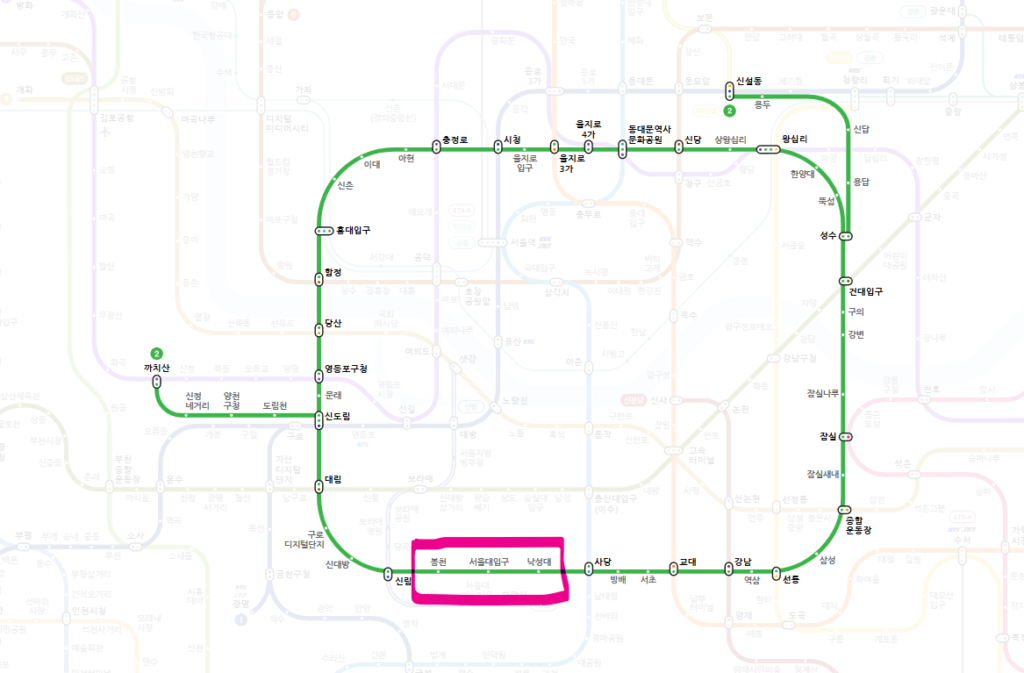
#1. Gwanak-gu — Nakseongdae, Seoul Nat’l Univ. & Bongcheon (Best Value)
The first place I recommend to anyone new to Seoul is Gwanak-gu, especially the area around Seoul National University Station, Nakseongdae Station, and Bongcheon Station on Line 2.
The biggest advantage is Line 2 itself. Line 2 loops around Seoul’s major business and nightlife hubs — Gangnam, Sinchon, Hongdae, Euljiro — so no matter where you commute, you can often get there without transferring. If your first job or school location isn’t decided yet, Line 2 is the safest bet.
The rent is appealing too. Studios here run roughly a 10-million-won deposit with 400,000–700,000 won monthly rent — lighter than the Seoul average. With Seoul National University nearby, the area is full of students and young professionals, giving it a lively, youthful vibe, and there are tons of cheap restaurants and cafés that help you save on living costs. One thing to note: the area is hilly, so when viewing a room, always check the walking distance from the station and the slope.
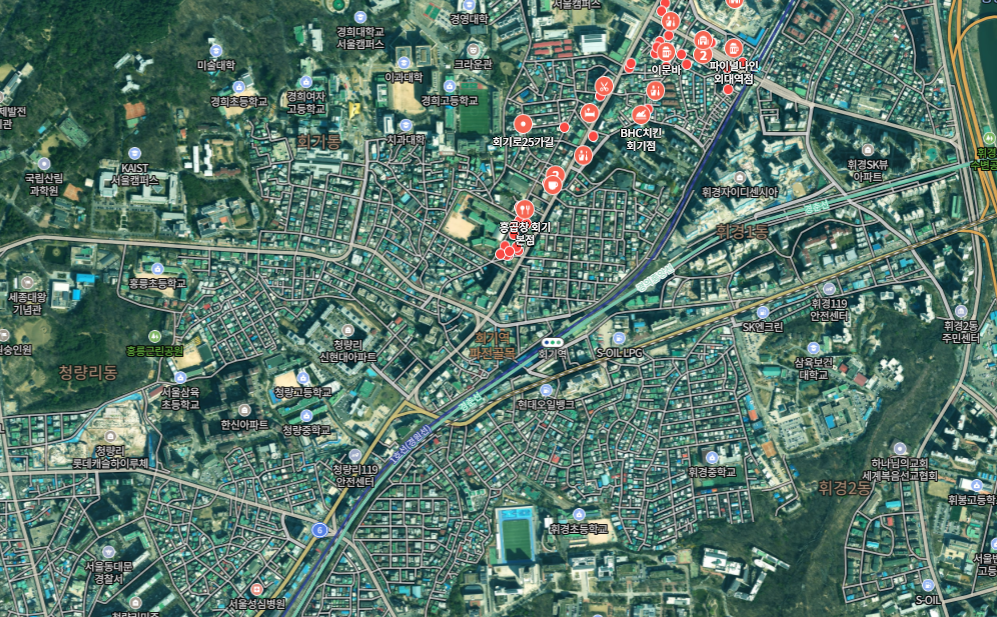
#2. Dongdaemun-gu — Hoegi & Imun-dong (Great for International Students)
Second is the Hoegi and Imun-dong area in Dongdaemun-gu. With Kyung Hee University, Hankuk University of Foreign Studies, and the University of Seoul clustered here, it’s nearly ideal for international students.
Its strengths are low rent and a foreigner-friendly environment. As a university district, there are plenty of listings with low deposits and affordable rent (400,000–600,000 won is common), and many offer full furnishings and short-term leases — convenient for foreigners settling in for the first time. With students from all over the world living here, foreign grocery stores and international restaurants are easy to find, and Line 1 and the Gyeongui–Jungang Line make getting downtown simple.
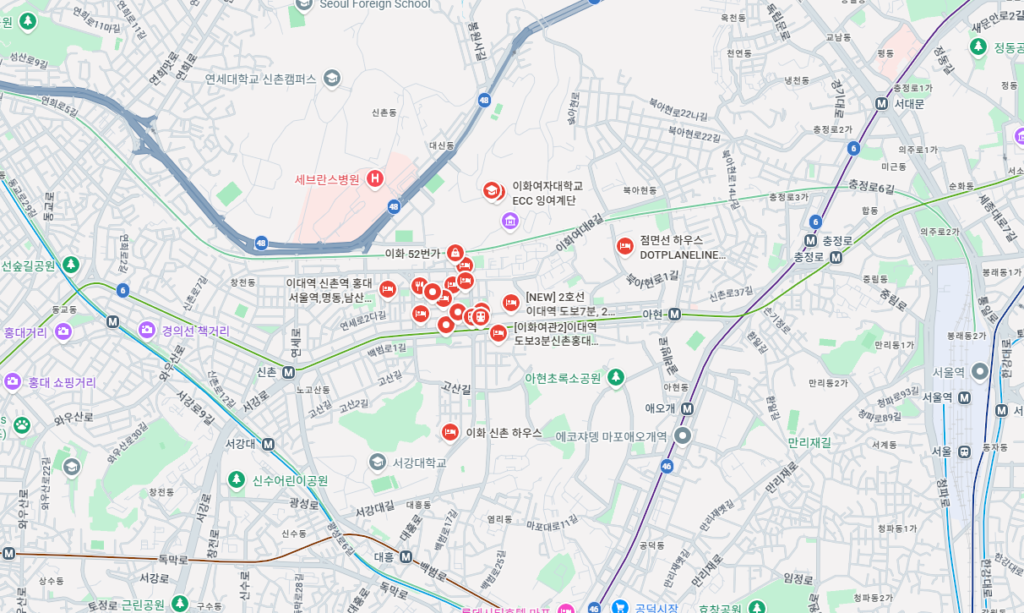
#3. Mapo-gu — Sinchon & Ewha (For Energy and Convenience)
Third is the Sinchon and Ewha area in Mapo-gu. Rent can run slightly higher than the previous two, but it’s great if you want a balance of amenities, energy, and transport.
Home to Yonsei and Ewha Womans University, the area buzzes with classic university-town energy, and cafés, restaurants, shopping, and cultural venues are all within walking distance, making life easy without a car. Sinchon Station on Line 2 and the Gyeongui–Jungang Line get you quickly to Hongdae, Gangnam, or downtown. Since it’s a busy district, rent for the same conditions can be a bit higher than the other two, so if your budget is tight, look for listings on the side streets a block or two off the station.
How to Find a Place in Korea — Real Estate Agents & Apps
Once you’ve picked a neighborhood, it’s time to actually find a place. There are two main ways to house-hunt in Korea, and I recommend using both together.
1. Visiting a Real Estate Agent (Gongin-junggaesa) in Person
In Korea, most leases are signed through a gongin-junggaesa — a licensed real estate agent. These are the neighborhood offices commonly called budongsan (부동산). You can walk right into one and say you’re looking for a studio in a certain price range, and the agent will show you listings and help with the contract. As a foreigner, it helps to ask in advance whether the office speaks English, or to bring a Korean-speaking friend.
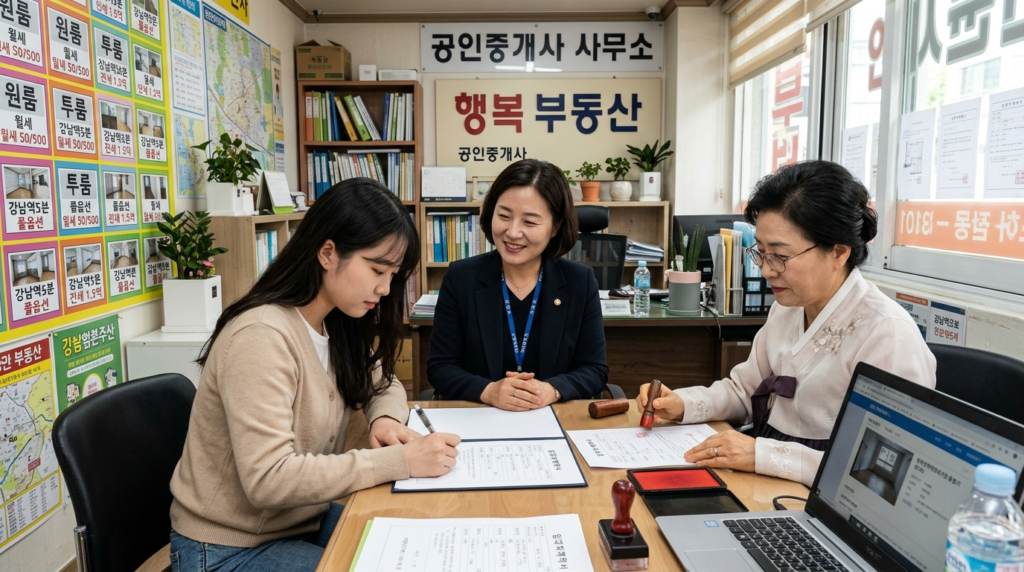
The advantage of visiting in person is that you can see listings that aren’t posted on apps and get a real feel for the neighborhood. Just note that when a deal closes, there’s a legally set agent commission (bokbi), so confirm the fee before signing.
2. Searching Apps First (Zigbang, Dabang, Peterpan)
These days, checking prices and listings on apps before doing legwork is standard. Zigbang is Korea’s most popular real estate app, with the most listings and a map-based interface that’s easy for foreigners to use (there are even English tutorials online). Dabang is the other most-used app, and since the two carry slightly different listings, it’s worth checking both. Peterpan (피터팬의 좋은방 구하기) has many direct-from-landlord listings, which can save you the agent commission, while Naver Real Estate offers relatively accurate listings, making it good for gauging market prices.
One tip: save a few listings you like on the app, then visit a real estate office in that neighborhood — it’s far more efficient. Be aware that apps occasionally have “bait” fake listings, so be suspicious of anything priced abnormally low, and always view a place in person before signing.
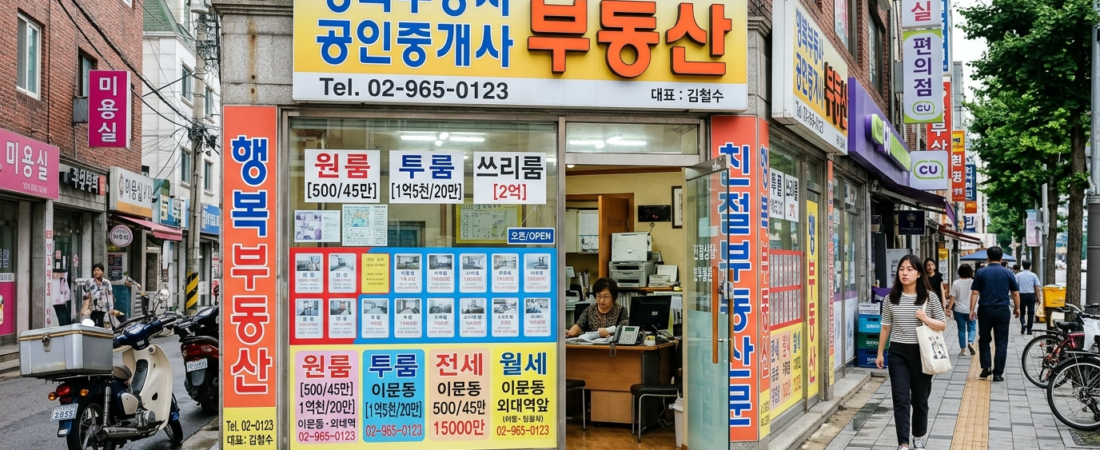
3. How to Spot a Real Estate Office Sign on the Street
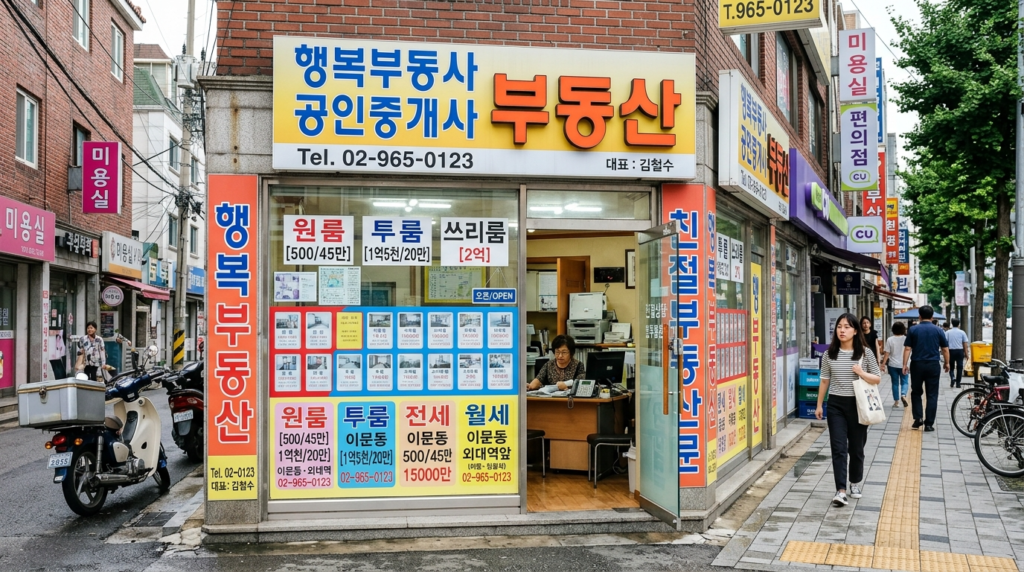
As you walk around a neighborhood, you’ll easily find real estate offices — their signs usually display the words 공인중개사 (licensed agent) or 부동산 (real estate) in large letters. If you’re not familiar with Korean, just remember these two words: 공인중개사 / 부동산. Signs and windows often list words like 원룸 (one-room/studio), 투룸 (two-room), 월세 (monthly rent), and 전세 (jeonse / lump-sum deposit lease) alongside prices, so you can gauge local rates at a glance. Some offices also write “Real Estate” in English. If you spot a budongsan while walking through a neighborhood you like, don’t hesitate to step in and ask.
Tips to Know Before You Sign
If you’re renting in Seoul for the first time, keep a few things in mind. Korea uses a deposit-plus-monthly-rent structure, and raising your deposit lowers your monthly rent, so you can adjust based on your finances. Even within the same neighborhood, price and satisfaction vary greatly depending on walking distance from the station, hills, and building age, so view places in person when you can. Finally, beyond studios, there are options like goshiwon and officetels, so compare based on your budget and length of stay.
Final Thoughts
To sum up: for the best value, go with Gwanak-gu (Nakseongdae / Seoul Nat’l Univ.); for international students, Dongdaemun-gu (Hoegi / Imun-dong); and for energy and convenience, Mapo-gu (Sinchon / Ewha). As for finding a place, the safest and most efficient approach is to check prices first on apps like Zigbang and Dabang, then visit a neighborhood real estate agent to sign. Seoul’s neighborhoods vary enormously in vibe and price, so narrow it down based on your commute, budget, and lifestyle. I hope this guide serves as a small compass for anyone starting their new life in Seoul.
#SeoulLiving #LivingInKorea #SeoulRent #Nakseongdae #SeoulNationalUniversity #Gwanaku #HoegiDong #Sinchon #Zigbang #Dabang #KoreaRealEstate #ApartmentHuntingKorea #ExpatsInKorea #StudyInKorea #SeoulApartments #MovingToSeoul #SeoulNeighborhoods #FirstApartment