As someone who grew up in Korea, I know our trash system can baffle newcomers. In this 2026 guide, I’ll walk you through everything: volume-rate (jongnyangje) bags, how to sort food waste and recyclables, where to buy bags, collection days, and how to avoid fines.
As someone born and raised in Korea, there’s one thing I see almost every foreign friend struggle with when they first arrive: throwing away the trash. I get it — to us it’s second nature, but for newcomers, Korea’s waste system can feel like a puzzle with a hundred rules. So let me explain it the way I’d explain it to a friend who just moved here. Once you get the hang of it, I promise it becomes effortless. Here’s everything you need to know in 2026 — how to sort your waste, which bags to buy and where, when to put it out, and how to avoid those annoying fines.
Korea’s Trash System: The Basics
Here in Korea, we run one of the strictest and most organized waste systems in the world, and it all comes down to one principle we grow up with: you pay for what you throw away. We separate household waste into four main categories — general waste, food waste, recyclables, and large/oversized items. The mistake I see foreigners make most often is mixing food waste in with general trash, and unfortunately that’s exactly the kind of thing that can get you fined.
Everything runs on what we call the volume-rate disposal system (jongnyangje, 종량제). In short, you have to use official, government-designated garbage bags, and the disposal fee is baked right into the price of those bags. So when you buy the correct bag, you’re essentially paying your trash collection fee at the same time.
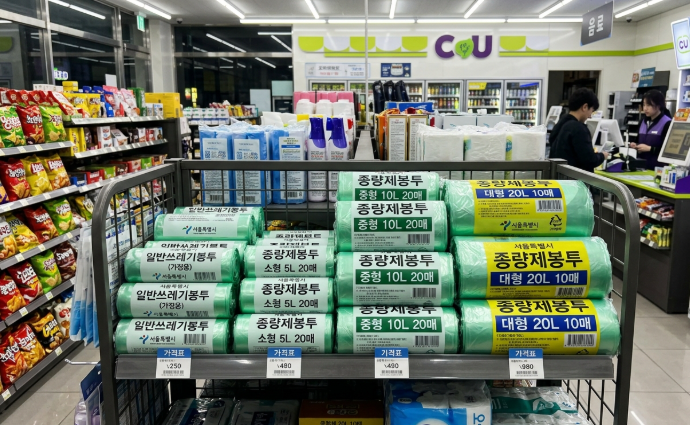
What Is a Jongnyangje Bag (종량제봉투)?
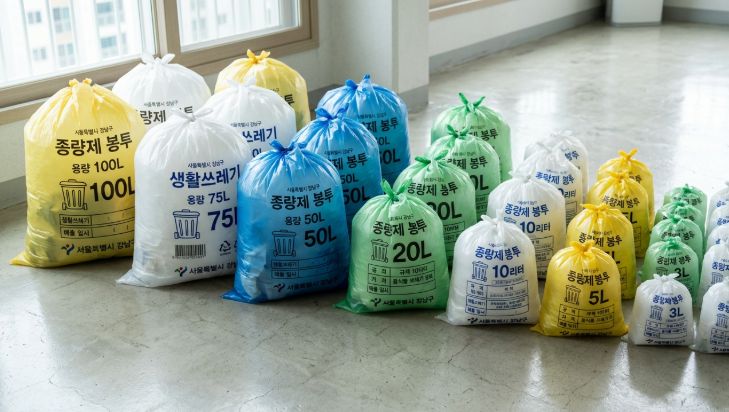
A jongnyangje bag is the official volume-rate garbage bag we’re all required to use for general waste. Here’s the one thing I always tell my foreign friends first: these bags are district-specific. A bag you bought in Gangnam-gu won’t work in Mapo-gu, because every district (gu) issues its own bags. So always buy the bag for the district where you actually live — this trips people up constantly.
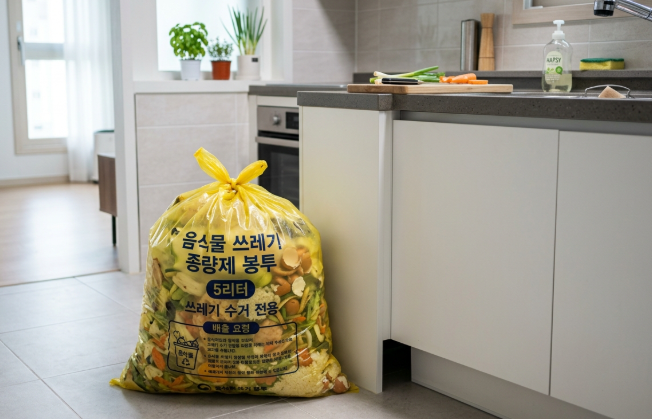
The bags come in several sizes — usually 5L, 10L, 20L, 50L, and 100L — and the bigger the bag, the more it costs, since you’re paying by volume. If you live alone, a 10L or 20L bag will usually be more than enough.
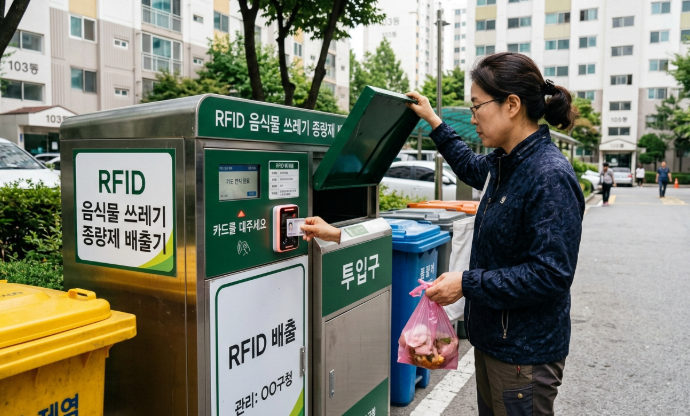
For food waste, we use a separate dedicated bag (often yellow), or in a lot of apartments, an RFID food waste machine — you scan a card, dump your food waste, and it charges you automatically by weight. The reason we’re so strict about this is that in Korea food waste gets recycled, often into animal feed or compost.
Where to Buy Garbage Bags
This is probably the question I get asked most, and the answer is wonderfully simple. You can pick up jongnyangje bags at convenience stores (CU, GS25, 7-Eleven, and so on), which are open 24/7 and the easiest option — just walk in and say “종량제봉투 주세요” (jongnyangje bongtu juseyo, “a garbage bag, please”). Supermarkets and large marts sell them too, often in multi-packs for a slightly better deal. The price is basically the same at a convenience store or a mart, because here the price is set by the district, not the shop. Just tell them your district and the size you need, and glance at the district name printed on the bag before you leave.
How to Sort Your Waste
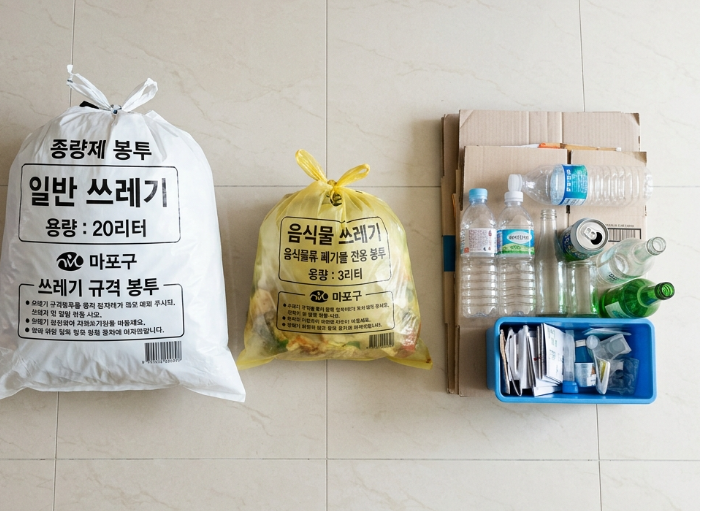
Let me break down the four categories the way we actually handle them at home:
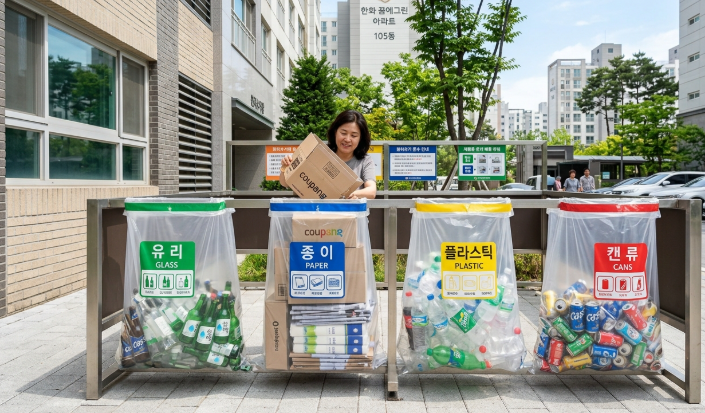
General waste goes straight into your district’s jongnyangje bag — anything that isn’t recyclable or food.
Food waste goes into a food waste bag or RFID machine. One heads-up: in many districts, things like bones, large seeds, shells, and tea bags don’t actually count as food waste. We Koreans check this too sometimes, so don’t feel bad about double-checking your local rules.
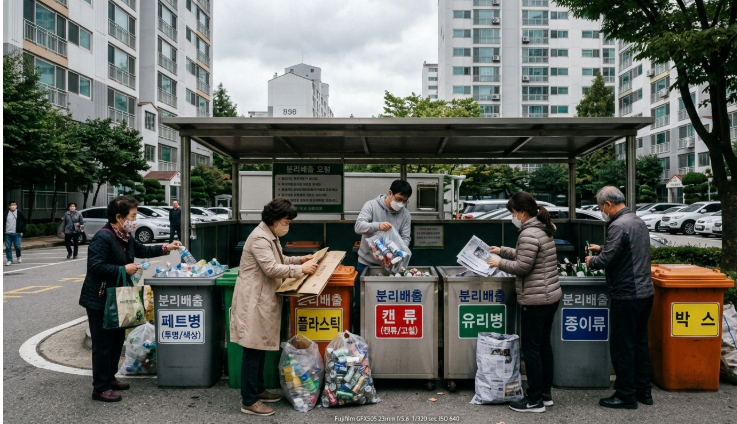
Recyclables (plastic, paper, glass, cans, vinyl/film, PET bottles) get sorted by type. You don’t need a special bag, but we always make sure they’re clean and dry — rinse out containers, flatten your boxes, and peel the labels off transparent PET bottles where it’s required.
Large items like furniture or appliances need a special paid sticker, which you apply for at your district office or online before putting them out on the curb.
When Can You Put Out Trash? (Collection Days)
This is the part that surprises a lot of newcomers, so pay attention here. The rules depend on where you live and what kind of building you’re in.
In Seoul, where I live, general waste and food waste can usually be put out every single day — we typically set ours out in the evening after dark, and it gets collected overnight. That makes daily disposal really convenient for most of us.
Recyclables are where it gets stricter. In many districts — especially for detached houses, villas, and small buildings — there’s a designated-day system for certain items like vinyl/film and transparent PET bottles, meaning you can only put those out on specific weekdays. If you live in an apartment complex, you’ll usually have a dedicated recycling area you can use more freely.
Because the exact days differ from district (gu) to district, and even neighborhood to neighborhood, my honest advice is: check the notice posted in your building, ask your landlord or building manager (we’re used to these questions!), or look up your district office’s guidelines. When you first move in, this is genuinely one of the first things I’d sort out.
How to Avoid Fines
We take waste rules seriously over here, and improper disposal really can result in administrative fines. From what I’ve seen, foreigners most often get fined for mixing food waste in with general trash, using a regular bag instead of an official jongnyangje bag, putting recyclables out on the wrong day, or tossing household trash into the public street bins (those are only meant for small bits of litter while you’re out and about). Stick to the categories, use your district’s bag, and respect the collection days, and honestly you’ll be completely fine.
Final Thoughts
I’ll be honest — even though I grew up with it, I can totally see why our trash system overwhelms people at first. But trust me, after a week or two it just clicks, and I think you’ll come to appreciate how thoughtfully it’s all designed. If you remember nothing else, remember these three things: always buy the jongnyangje bag for your own district, separate your food waste without exception, and check your building’s collection days for recyclables. Do that, and you’ll be sorting trash like a local before you know it. And whenever you’re unsure, your landlord, your building manager, and the notice board in your building are your best friends — we Koreans rely on them too.
LivingInKorea #KoreaTrashGuide #RecyclingInKorea #Jongnyangje #FoodWasteKorea #ExpatsInKorea #KoreaDailyLife #MovingToKorea #SeoulLife #KoreaTips #StudyInKorea #KoreaForBeginners #LifeInSeoul #KoreaGuide