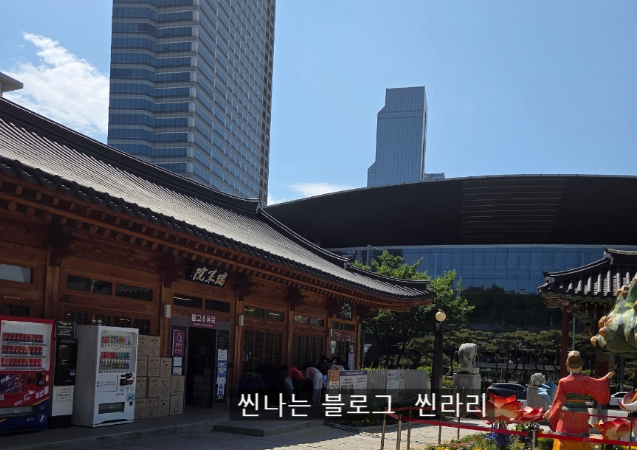
A frequent visitor’s guide to Bongeunsa Temple in Gangnam, Seoul: my favorite prayer route through Daeungjeon, Buleukbojeon, the Mireuk Daebul Buddha, and more, plus how to offer rice and flowers, use QR donations, and join the 2026 Buddha’s Birthday lotus lantern offering.
With Buddha’s Birthday approaching, I made another visit to Bongeunsa Temple — one of my favorite places in Seoul. What amazes me every time is that it sits right in the middle of Gangnam, yet the moment you step through the gate, the atmosphere completely changes. Whenever my mind feels cluttered, this is where I find myself going.
This is a guide based on my many visits: my usual prayer route, and everything you need to know about the 2026 Buddha’s Birthday lotus lanterns and prayer offerings.
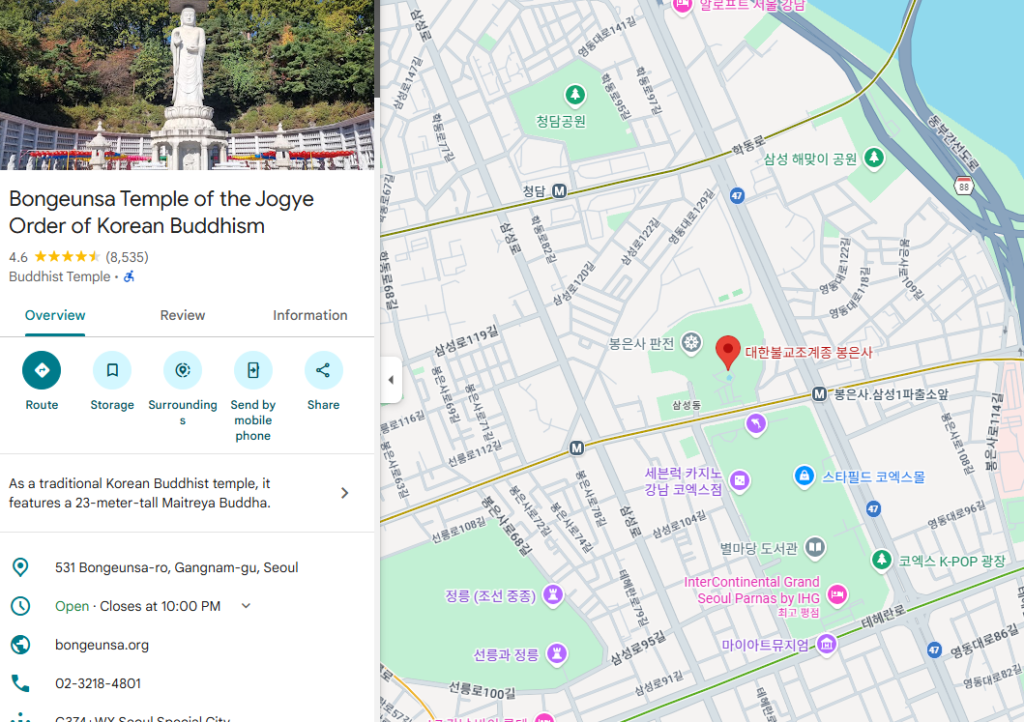
Where Is Bongeunsa Temple & How to Get There
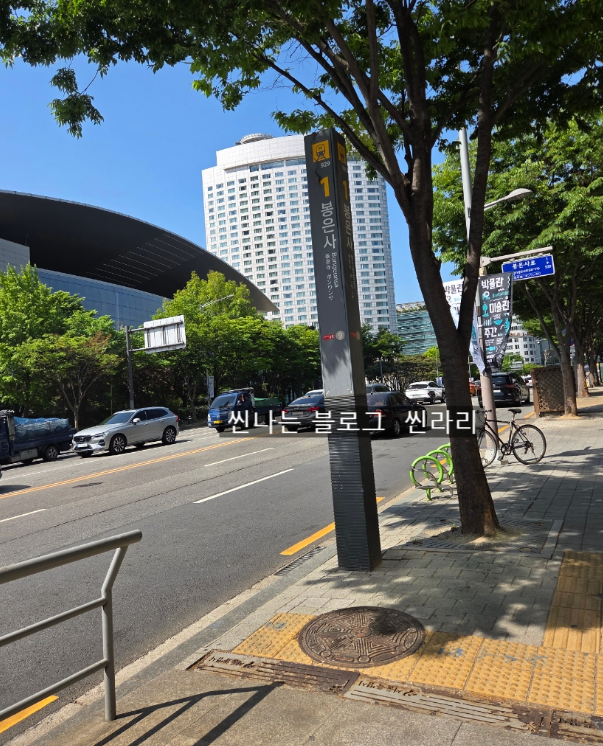
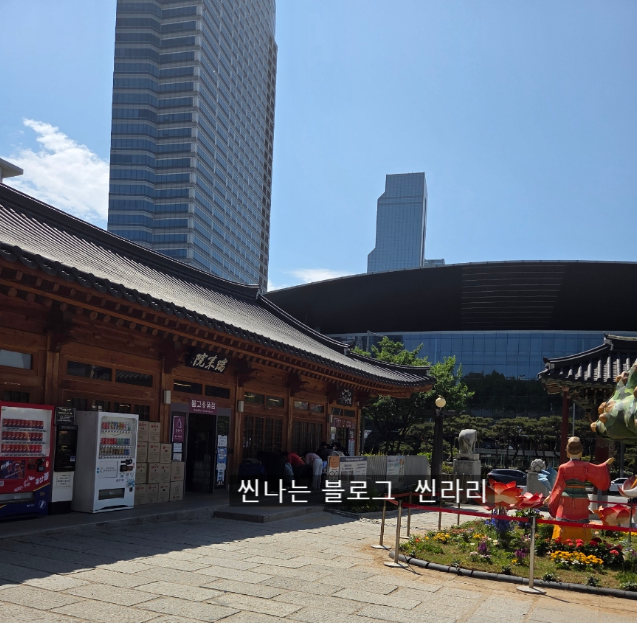
Bongeunsa is located in Gangnam-gu, Seoul, and it’s wonderfully easy to reach by public transport. You can walk there from Bongeunsa Station (Line 9, Exit 1) in just 1–2 minutes, or from Samseong Station (Line 2, Exit 6) in about 5–10 minutes. If you get off at Samseong Station, the signs even point you toward Starfield COEX Mall, so it’s a great area to combine with shopping.
https://maps.app.goo.gl/h1PwQsZAiaZXqpNg8
A little history: Bongeunsa was originally founded in 794, during the Silla period, by State Preceptor Yeonhoe. With over 1,200 years of history, it’s one of the most significant Buddhist temples in Seoul — which makes the contrast with the surrounding skyscrapers all the more striking.
Jinyeomun Gate & the Lotus Lanterns
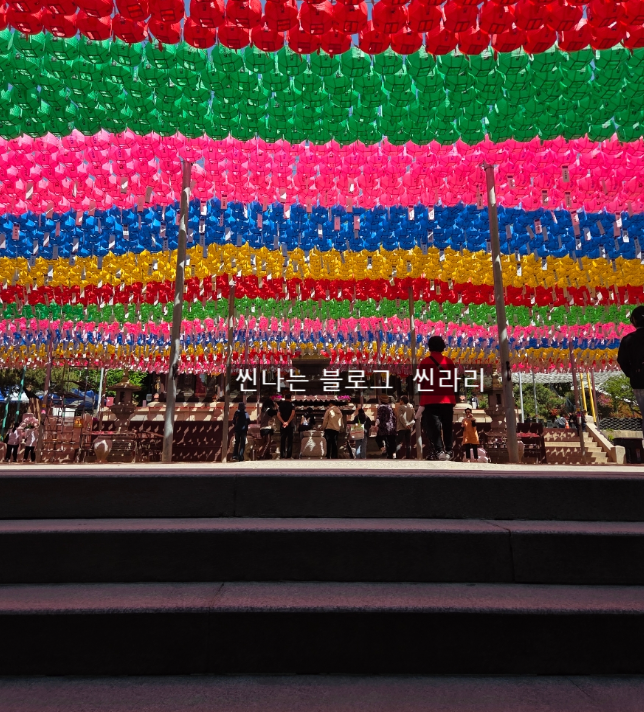
Walking through the main gate, Jinyeomun, I was immediately greeted by rows of colorful lotus lanterns. Bongeunsa around this time of year is genuinely beautiful — the lanterns make the whole temple feel warmer, and you can instantly sense that Buddha’s Birthday is near.
For 2026, Buddha’s Birthday falls on May 24, and the lanterns typically stay up around this period, so it’s a lovely time to visit.
Registering a Lotus Lantern (Prayer Lantern)
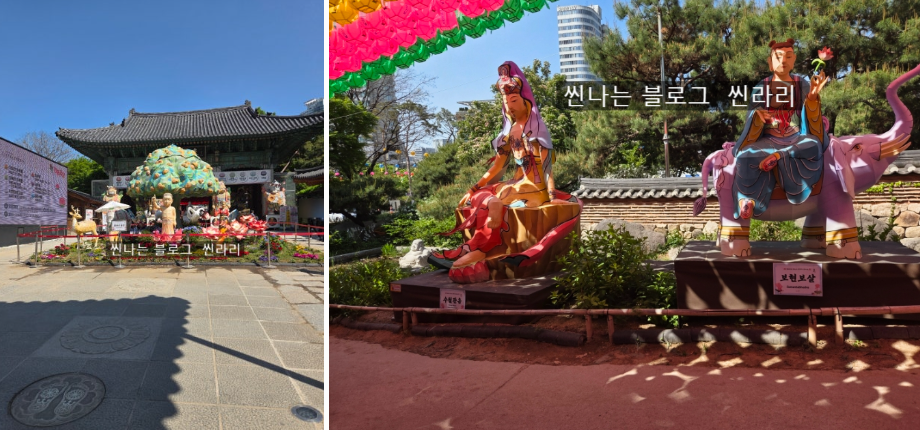
Right before entering Beopwangru, there’s a desk where you can register a wish lantern. I hung a 50,000-won family lantern, and they gave me a number, which was really useful for finding my lantern later. The staff told me lanterns are usually hung within 1–2 hours of registration; I came back a week later to find mine, and it was right there.
Making Offerings — Rice, Flowers & QR Donations
Near the temple office (jongmuso) by Beopwangru, you’ll find rice and red beans for offerings. What I appreciated is that the process now feels much more relaxed — rather than asking someone for every step, you can quietly transfer money by bank account or drop it in the offering box. Since many people carry no cash these days, each hall now has a QR code for donations, which I found surprisingly practical.
I usually buy a bag of rice and write my birth year and my family’s names before heading up. In Buddhism, offering rice carries the meaning of sharing food, so many people offer it while wishing for their family’s peace and blessings.
A common question is how to write your name. Generally, writing your name, birth year, and family members’ names is perfectly fine. People with a Buddhist name (beopmyeong) may use it, but your real name works just as well. What matters most isn’t the format — it’s the sincerity of who you’re praying for.
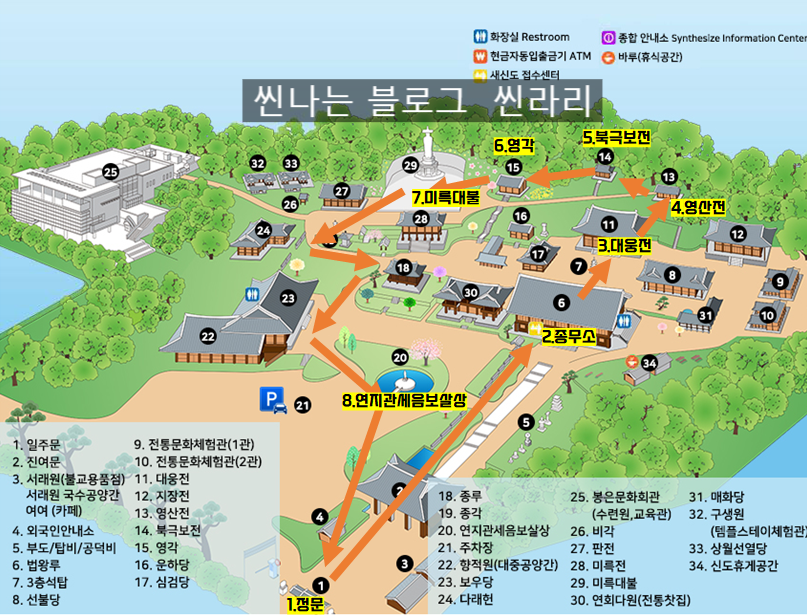
My Usual Prayer Route
1. Daeungjeon (Main Hall) — My first stop is always Daeungjeon, the main hall. Monks are often praying here, with worshippers quietly joining in, and the atmosphere naturally calms my mind. The current building was rebuilt in 1941, and it truly feels like the heart of Bongeunsa.
2. Yeongsanjeon — From Daeungjeon, a staircase to the right leads up to Yeongsanjeon, a hall symbolizing the Buddha’s sermon on Vulture Peak. It has a quieter, calmer mood than the main hall, and being a smaller space, it actually helps me focus more.
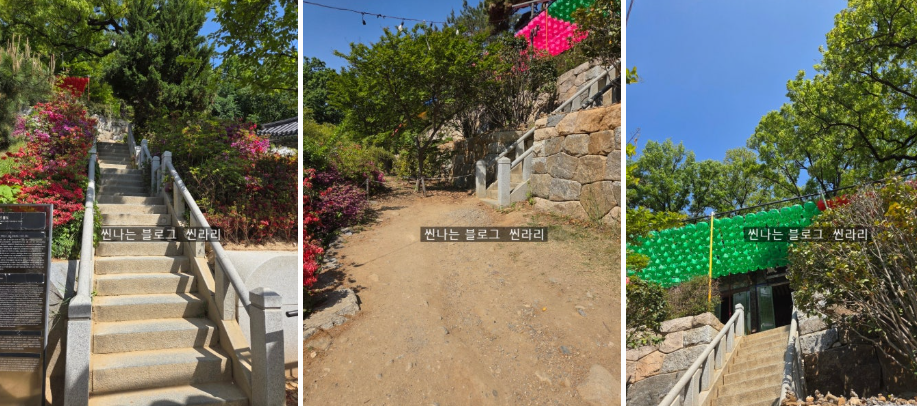
3. Buleukbojeon — This is the hall I consider most important at Bongeunsa. Connected to the Seven Stars (Chilseong) faith — think of it like a Chilseonggak — it’s a place to pray for fortune, health, longevity, and relationships. Bongeunsa itself describes it as a “hall of answered prayers,” and it’s said that “a wish made here is sure to come true.” It’s always crowded — so much so that an extra vinyl door has been added on the outside, a familiar sight unique to Bongeunsa’s Buleukbojeon. I always linger here a little longer than anywhere else.
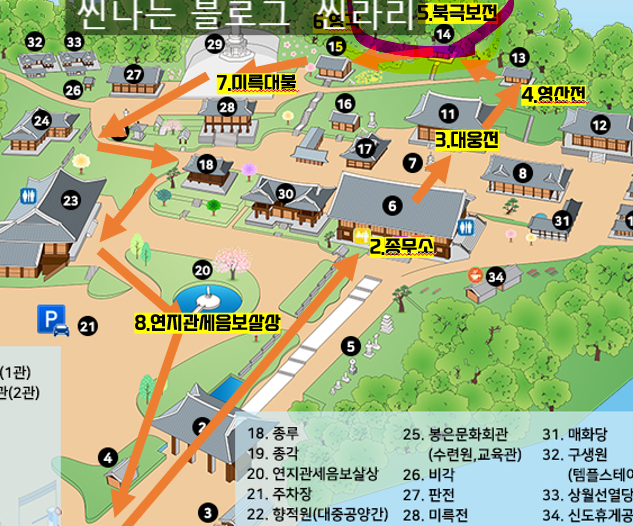
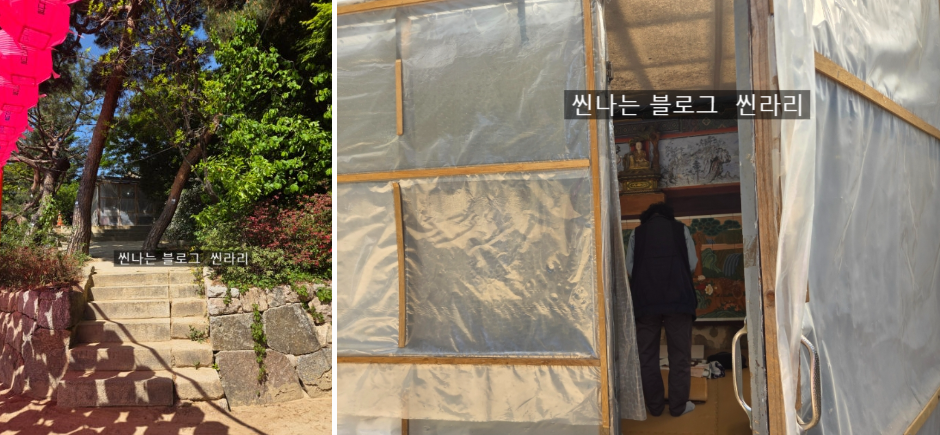
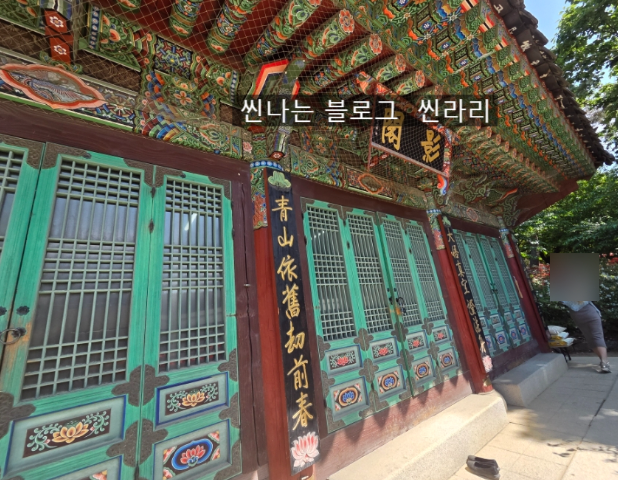
4. Yeonggak — After praying, I stop by Yeonggak, the hall enshrining portraits and tablets of eminent monks tied to Bongeunsa’s history. While the temple is generally busy, Yeonggak stays especially quiet, so I often like it best. Knowing one quiet spot inside a crowded temple makes the whole visit more comfortable.
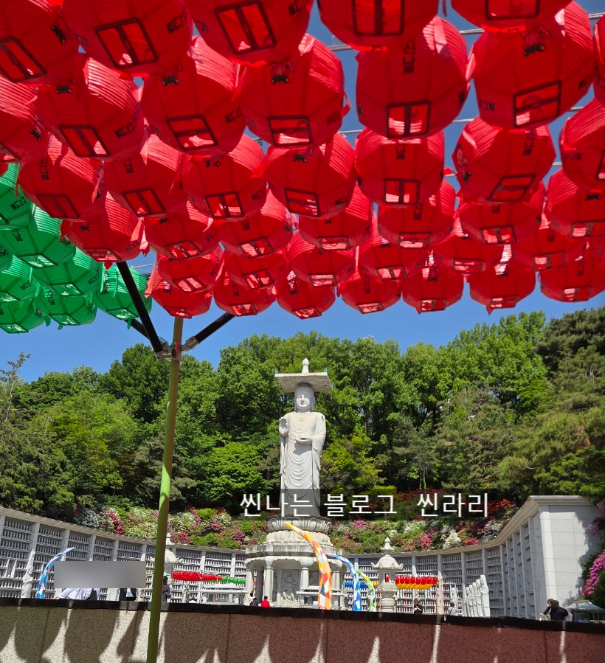
5. Mireuk Daebul (Great Maitreya Buddha) — Next I head to the Mireuk Daebul. Up close, it’s far more majestic than you’d expect — at 23 meters, it’s the tallest stone Buddha statue in Korea. Bongeunsa explains that praying here invokes the Maitreya Buddha’s power for health, happiness, and the fulfillment of wishes, and I always find myself steadying my heart once more in front of it.
On the way, you may also catch a monk striking the drum at the Jongru (bell pavilion). This drum, called the beopgo, signals the start of prayer services and is said to awaken all beings on earth.
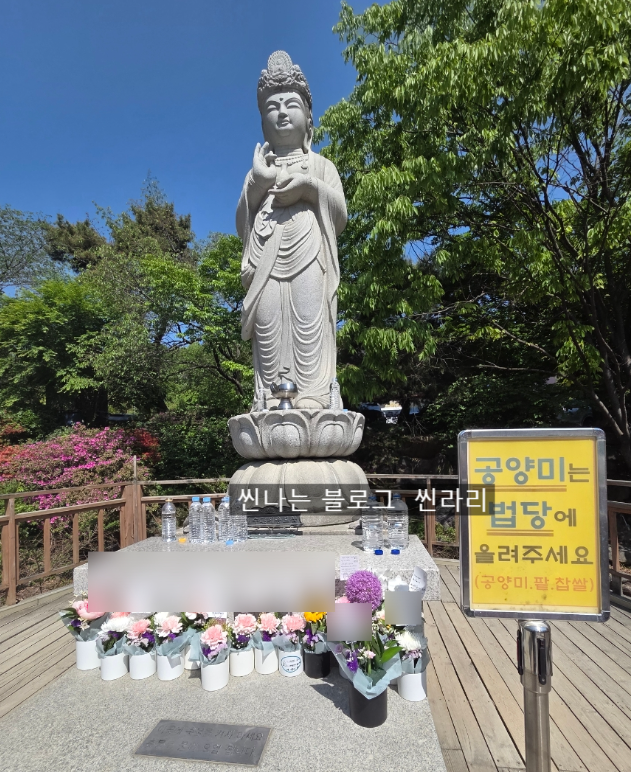
6. Yeonji Avalokitesvara Statue — Instead of going back the way I came, I take the back path down and finish at the Yeonji Avalokitesvara statue by the pond. Avalokitesvara is the bodhisattva of compassion who hears and relieves the suffering of all beings. The setting here is wonderfully serene — the perfect way to wrap up a loop around Bongeunsa. Many people make flower offerings here, which in Buddhism symbolize sincerity, patience, and a good heart, so on some visits I leave a flower too. It feels like ending the visit by tidying up my heart.
The Buddhist Goods Shop
Before leaving, the Buddhist goods shop is worth a browse — from offering flowers to bracelets and various ritual items, there’s plenty to see.
Final Thoughts
My usual route runs: Daeungjeon → Yeongsanjeon → Buleukbojeon → Yeonggak → Mireuk Daebul → Yeonji Avalokitesvara.
What never stops amazing me is how a temple this accessible — right in the middle of Gangnam — can feel so quiet and deep once you’re inside. Around Buddha’s Birthday especially, the lanterns are gorgeous, and offering prayers feels all the more meaningful.
Whenever I visit, I don’t pray for anything grand. I just quietly wish for my family’s health and a little peace of mind. Maybe that’s why, even though I walk the same route each time, it always feels a little different — and I leave with my mind a bit more settled.
If you’re in Seoul and want to soak in the lantern atmosphere or simply pray in quiet, Bongeunsa is well worth a visit this season.
BongeunsaTemple #SeoulTemple #BuddhasBirthday #LotusLanternFestival #Gangnam #SeoulTravel #KoreanTemple #VisitSeoul #ThingsToDoInSeoul #VisitKorea #MireukDaebul #SeoulItinerary #TempleInSeoul #KoreaTravel #SeoulHiddenGems